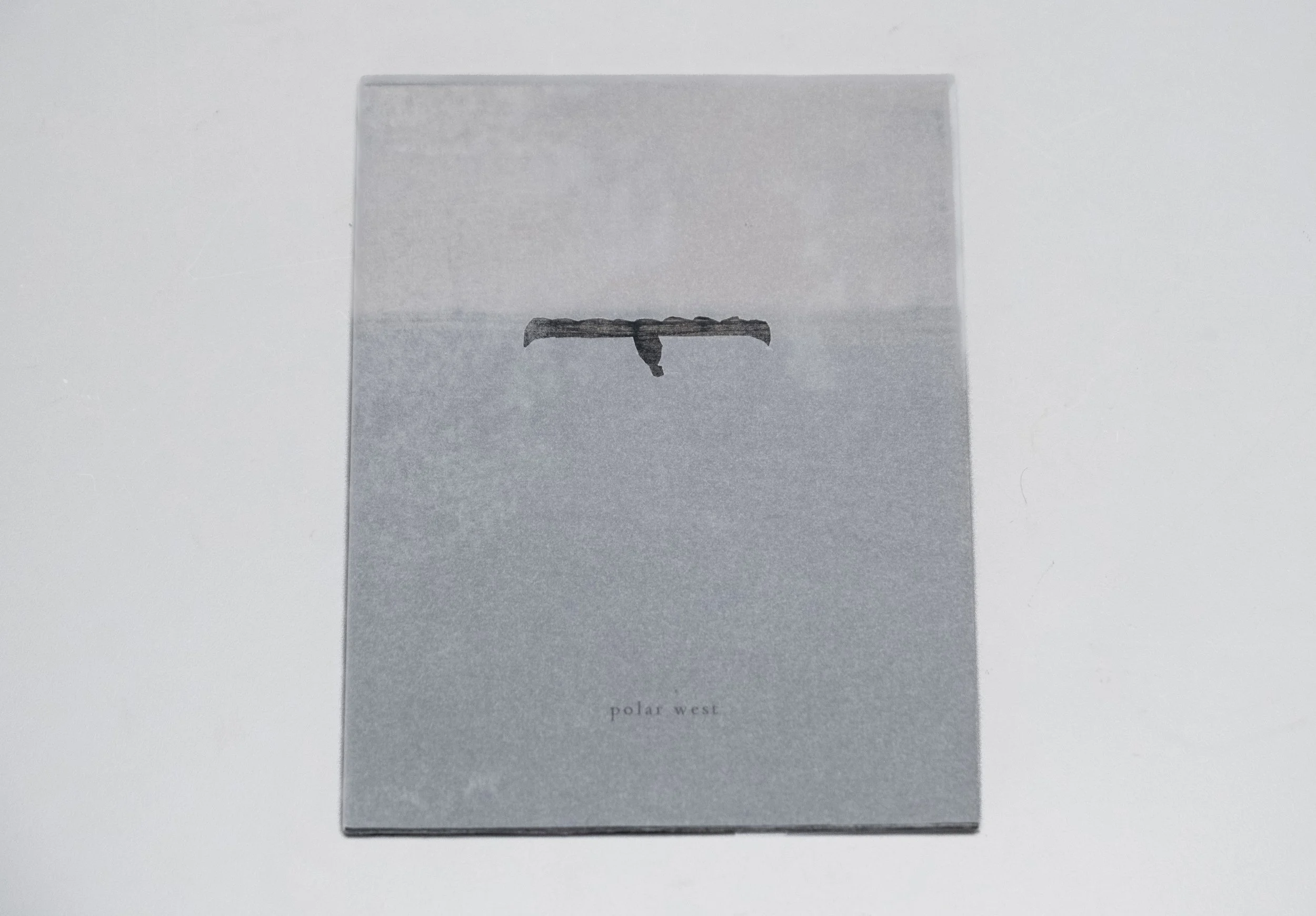
polar west (closed)
handprinted with laser-etched photo woodcut, and transfer drawings, unfolds to reveal linocut horizon print on Strathmore Toned Gray paper, with letterpress printed tracing paper cover wrap
“polar west” is an imagining of an impossible place, the furthest-most western point on the map. Growing up on the Oregon Coast, I would spend hours looking out to the flat horizon, wondering what lay beyond. The west, as a concept, has traced itself through iterations in the mythic imagination, from the Irish voyages of St. Brendan the Navigator, to the immigration (forced and voluntary) from the Europe and Africa to the Americas, to my own pioneer Mormon ancestors crossing the plains of middle America, to the expeditions of Lewis and Clark. Unlike the North or South Poles, however, there is no western-most point. West exists always further beyond the horizon, never attainable.
6pp
ed. of 10
6" by 8" closed
16" by 23.5" fully opened
2016
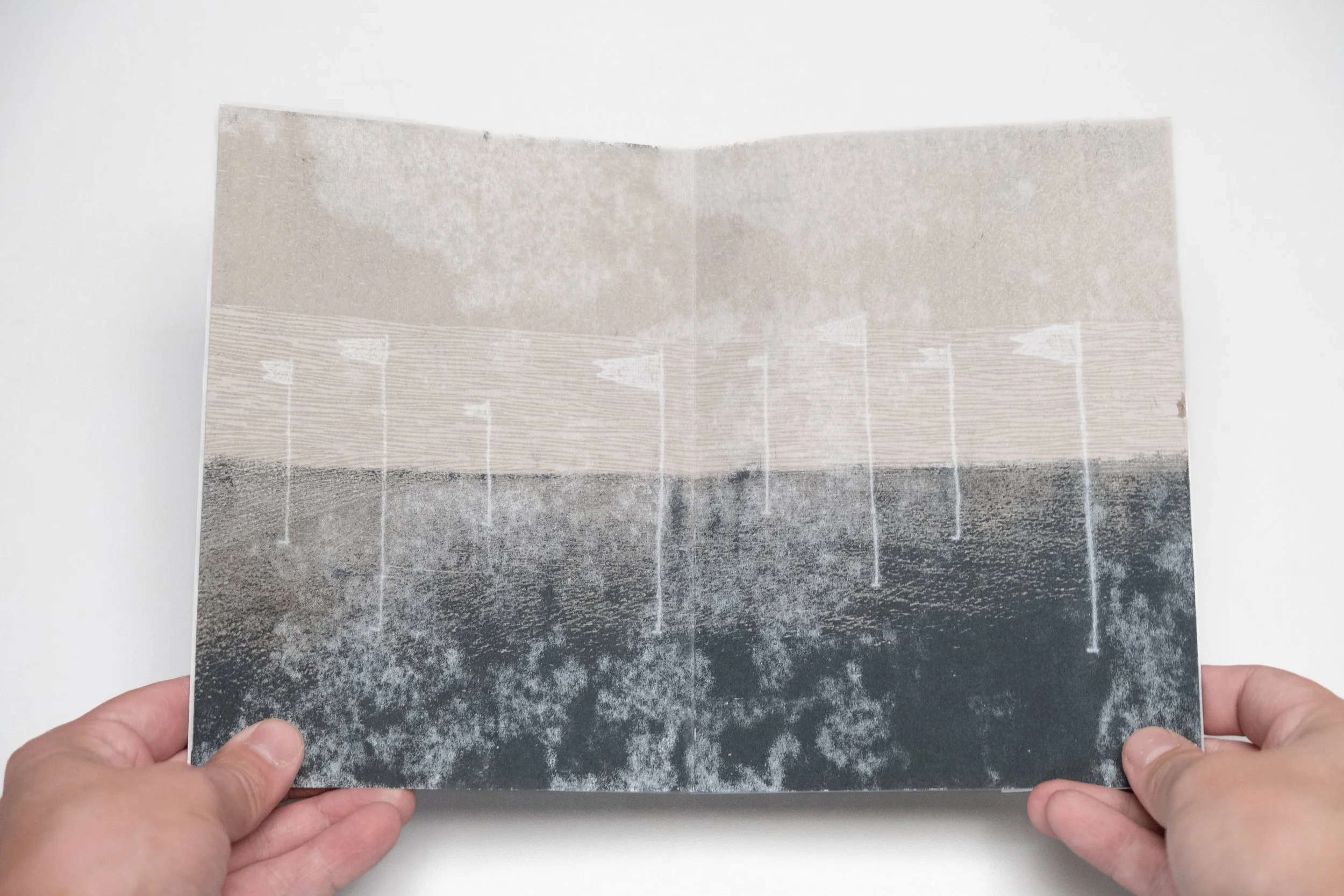
polar west (open)
handprinted with laser-etched photo woodcut, and transfer drawings, unfolds to reveal linocut horizon print on Strathmore Toned Gray paper, with letterpress printed tracing paper cover wrap
“polar west” is an imagining of an impossible place, the furthest-most western point on the map. Growing up on the Oregon Coast, I would spend hours looking out to the flat horizon, wondering what lay beyond. The west, as a concept, has traced itself through iterations in the mythic imagination, from the Irish voyages of St. Brendan the Navigator, to the immigration (forced and voluntary) from the Europe and Africa to the Americas, to my own pioneer Mormon ancestors crossing the plains of middle America, to the expeditions of Lewis and Clark. Unlike the North or South Poles, however, there is no western-most point. West exists always further beyond the horizon, never attainable.
6pp
ed. of 10
6" by 8" closed
16" by 23.5" fully opened
2016

polar west (detail)
handprinted with laser-etched photo woodcut, and transfer drawings, unfolds to reveal linocut horizon print on Strathmore Toned Gray paper, with letterpress printed tracing paper cover wrap
“polar west” is an imagining of an impossible place, the furthest-most western point on the map. Growing up on the Oregon Coast, I would spend hours looking out to the flat horizon, wondering what lay beyond. The west, as a concept, has traced itself through iterations in the mythic imagination, from the Irish voyages of St. Brendan the Navigator, to the immigration (forced and voluntary) from the Europe and Africa to the Americas, to my own pioneer Mormon ancestors crossing the plains of middle America, to the expeditions of Lewis and Clark. Unlike the North or South Poles, however, there is no western-most point. West exists always further beyond the horizon, never attainable.
6pp
ed. of 10
6" by 8" closed
16" by 23.5" fully opened
2016
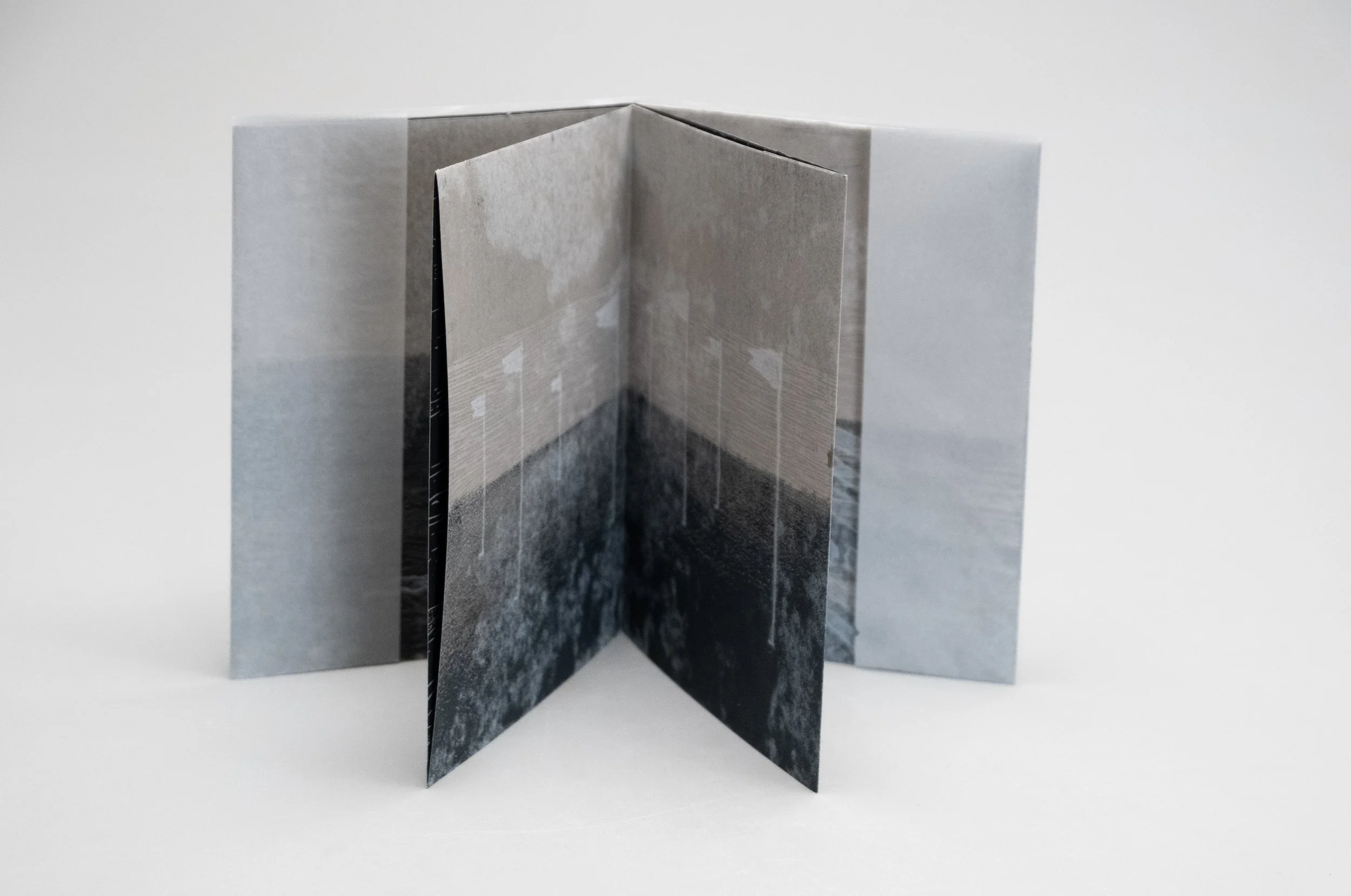
polar west
handprinted with laser-etched photo woodcut, and transfer drawings, unfolds to reveal linocut horizon print on Strathmore Toned Gray paper, with letterpress printed tracing paper cover wrap
“polar west” is an imagining of an impossible place, the furthest-most western point on the map. Growing up on the Oregon Coast, I would spend hours looking out to the flat horizon, wondering what lay beyond. The west, as a concept, has traced itself through iterations in the mythic imagination, from the Irish voyages of St. Brendan the Navigator, to the immigration (forced and voluntary) from the Europe and Africa to the Americas, to my own pioneer Mormon ancestors crossing the plains of middle America, to the expeditions of Lewis and Clark. Unlike the North or South Poles, however, there is no western-most point. West exists always further beyond the horizon, never attainable.
6pp
ed. of 10
6" by 8" closed
16" by 23.5" fully opened
2016
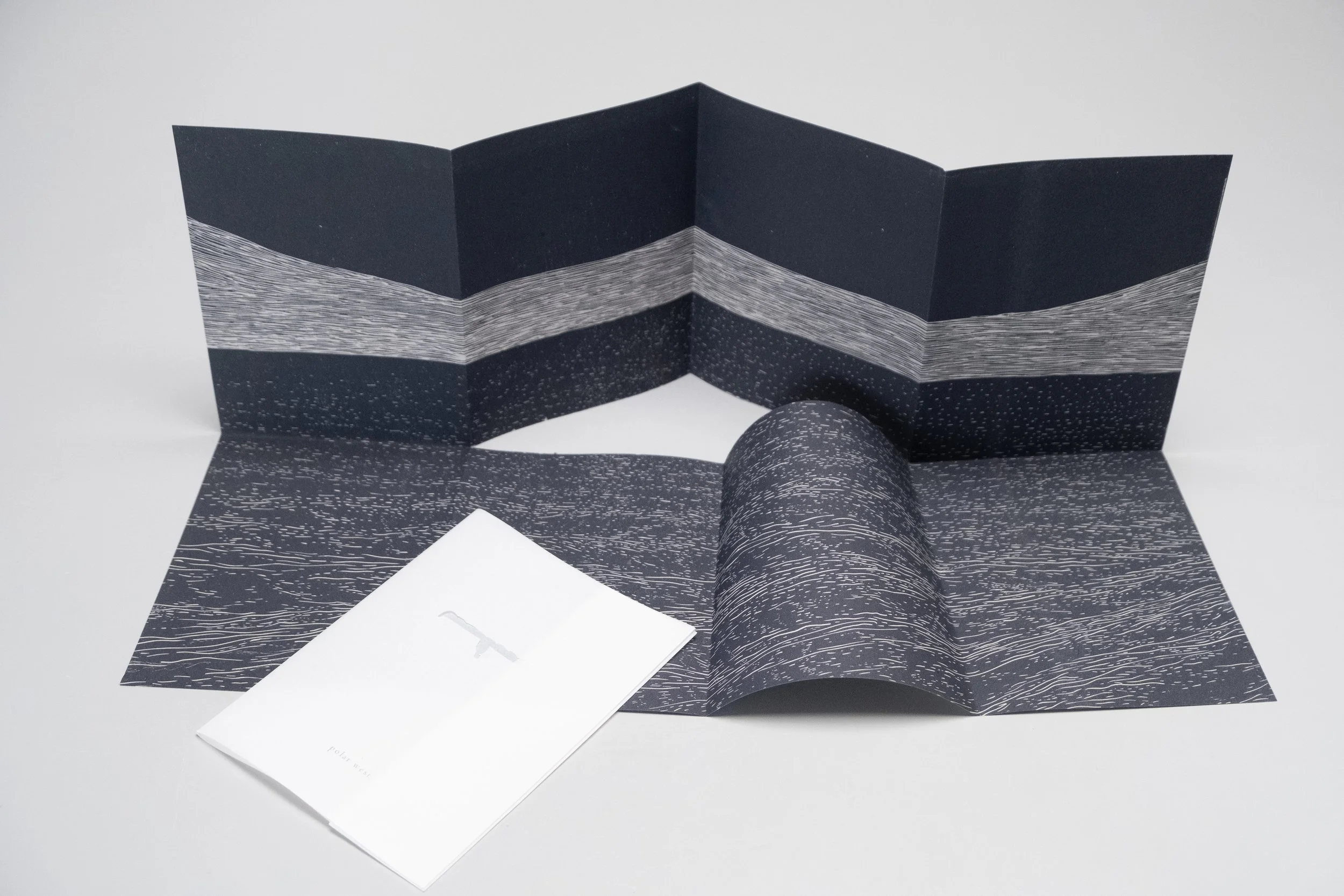
polar west (fully open fold out)
handprinted with laser-etched photo woodcut, and transfer drawings, unfolds to reveal linocut horizon print on Strathmore Toned Gray paper, with letterpress printed tracing paper cover wrap
“polar west” is an imagining of an impossible place, the furthest-most western point on the map. Growing up on the Oregon Coast, I would spend hours looking out to the flat horizon, wondering what lay beyond. The west, as a concept, has traced itself through iterations in the mythic imagination, from the Irish voyages of St. Brendan the Navigator, to the immigration (forced and voluntary) from the Europe and Africa to the Americas, to my own pioneer Mormon ancestors crossing the plains of middle America, to the expeditions of Lewis and Clark. Unlike the North or South Poles, however, there is no western-most point. West exists always further beyond the horizon, never attainable.
6pp
ed. of 10
6" by 8" closed
16" by 23.5" fully opened
2016